Vouch for authentication
I’ve started using Vouch for SSO to my personal site. Quite happy with the experience - it integrates well with Nginx, was straight forward to setup, and is straight forward to enable for different paths on the site.
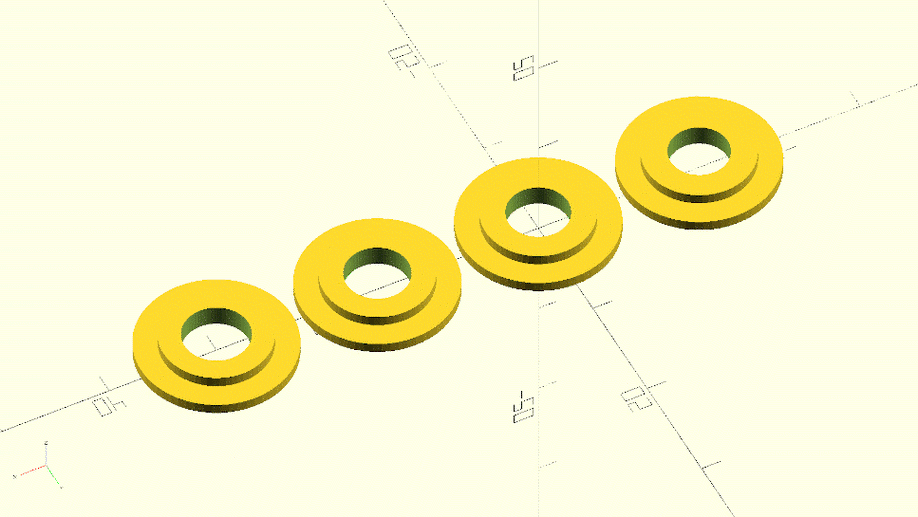
Propeller adapter
A nice thing about having a 3D printer is quick fixes to small things. The 8x4 propeller that came with my Bixler 3 was loose on the motor shaft, so I 3D printed an adapter:

Bixler 3 Drone
I recently purchased a HobbyKing Bixler 3 to use as a autopilot platform and am pretty happy with how it turned out. Both the under wing area and nose area have plenty of room and could easily fit a Pixhawk 4 Mini with GPS and telemetry.
Pan/tilt mount for a cell phone
I think it’s important to also post about the projects that didn’t turn out. Pudel was a project to automatically track and video a model plane using a cell phone camera.
Tracking using a camera
Here’s Kieferbot being tracked through a camera: It took a few iterations but I settled on matching the colour of the floor to create a floor mask, then findCountours to find the contours as a tree, and then searching the children of the root contours.
Self-contained and smoke
A day of highs and lows. Here’s Kieferbot still in teleop mode but now self contained: The PinePhone is taking commands from a PS4 DualShock over Bluetooth using ds4drv and sending them to the IO board over serial.
Teleop
As a winter project, I’m turning my PinePhone into an indoor robot. The Pinephone has everything needed for a decent stand-alone robot: plenty of CPU, a camera, gyro/accelerometor/compass, display, and it can run Debian.
Bare metal Raspberry Pi Zero
These are short notes on loading baremetal software on the Raspberry Pi Zero. I started down this path due to wanting to learn Rust, which lead to Tock which is an embedded operating system in Rust.
ESPHome as a Ruuvi bridge
ESPHome is a framework for building custom home automation that runs on an ESP8266 or ESP32. It’s pretty cool - you select and configure components by writing a YAML file, which then drives host side Python snippets to configure and bind the device side code, which is then built and pushed using PlatformIO.
Android phone as an alarm clock
My son wanted to get an alarm clock for his room which preferably plays MP3s. MP3 players are surprisingly expensive at 40 CHF for a 4 GiB model so I picked up a used Moto E 2nd gen phone for 35 GBP, loaded a stripped down version of Lineage OS on it, and designed a 3D printed a stand: